
Challenge
The ordering flow had evolved organically over time. Users faced long forms, inconsistent UI patterns, limited mobile optimization and weak trust signals during the most critical decision-making moments.
Joining Grabr as a Product Designer, I helped redesign the core commerce experience for a marketplace connecting buyers with international travelers. My responsibility extended beyond interface design: I worked on reducing friction throughout the order journey, increasing user trust, establishing a scalable design system, and improving operational efficiency through internal products.
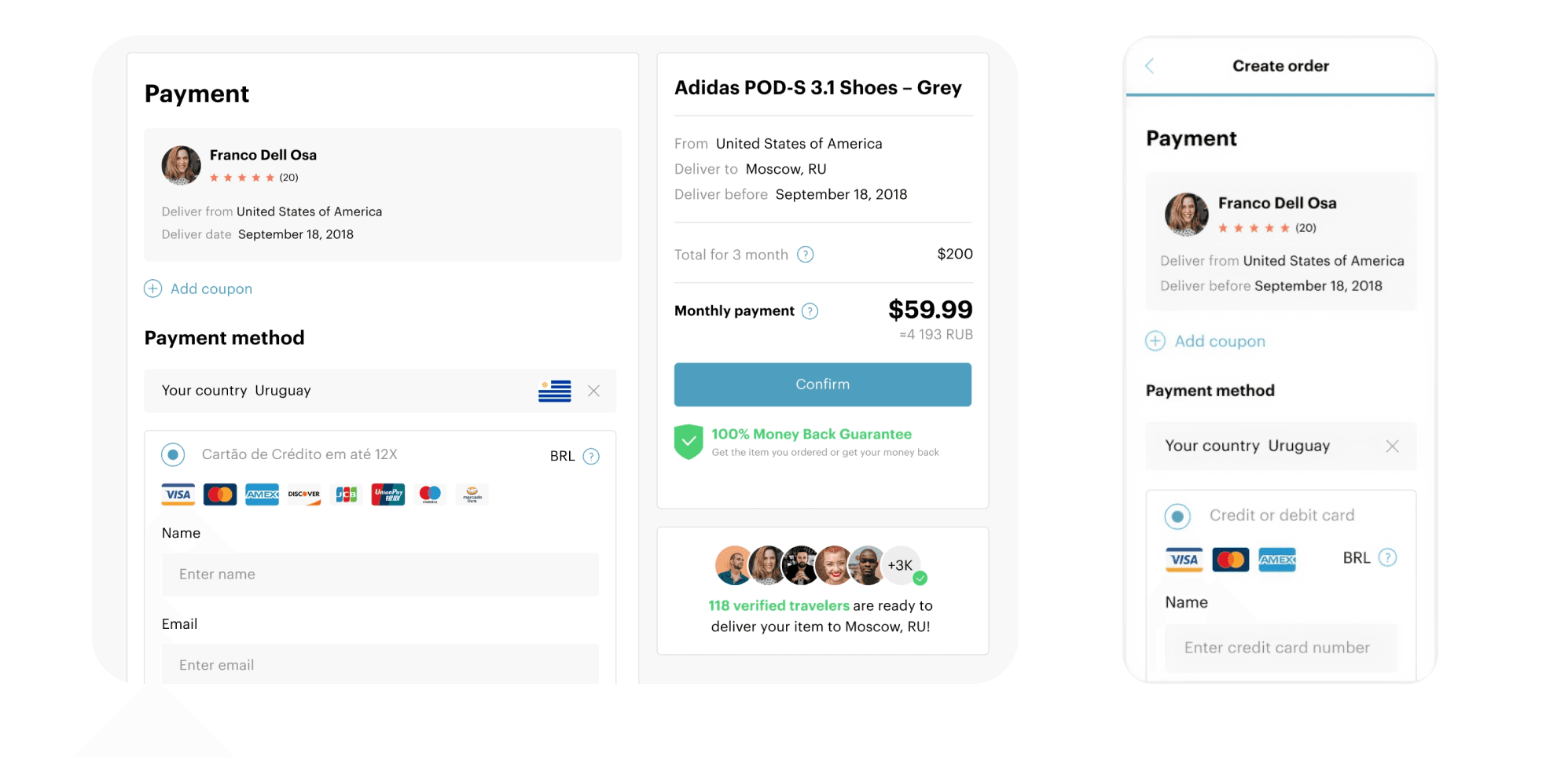
The ordering flow had evolved organically over time. Users faced long forms, inconsistent UI patterns, limited mobile optimization and weak trust signals during the most critical decision-making moments.
Instead of redesigning individual screens, we restructured the entire service around a single principle: reduce uncertainty before asking users for commitment. Every interaction - from checkout to payment - was redesigned to increase clarity, transparency and confidence.
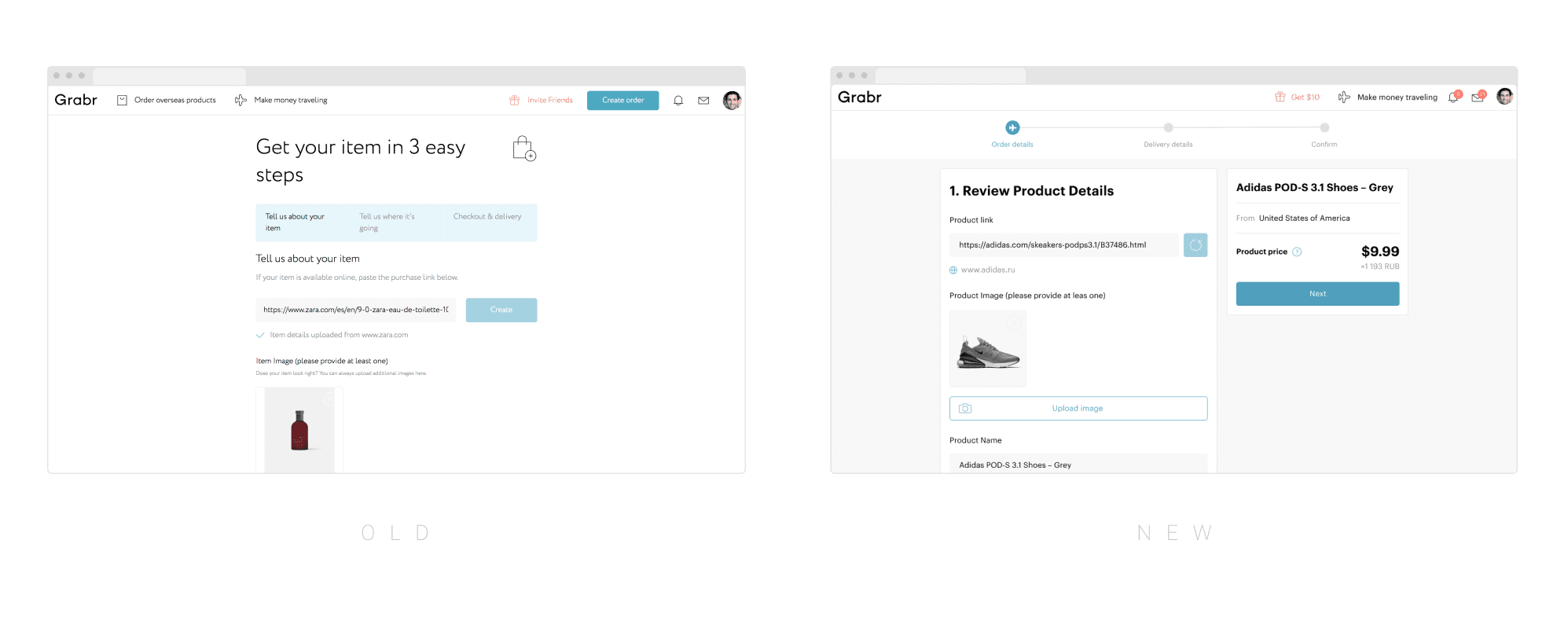
PRODUCT STRATEGY
The redesign focused on four strategic objectives: reduce cognitive load during order creation, increase confidence before payment, build reusable product foundations instead of one-off solutions, and align customer-facing experiences with internal operational workflows. The product direction treated trust as a system of decisions across checkout architecture, pricing transparency, traveler credibility, payment clarity and operational tooling.
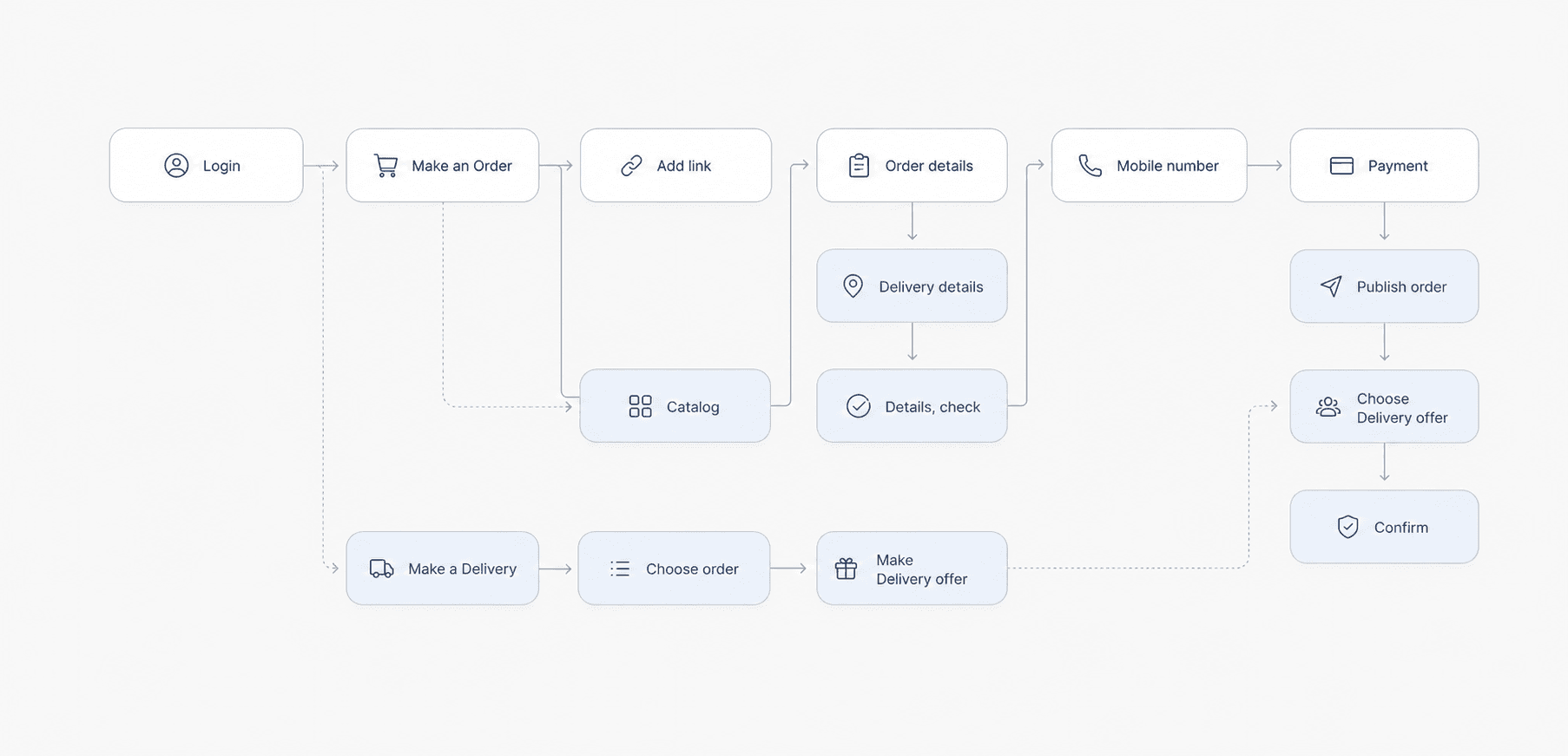
CORE PRODUCT DECISIONS
The work connected customer-facing commerce improvements with internal product infrastructure, creating a more scalable base for future marketplace growth.
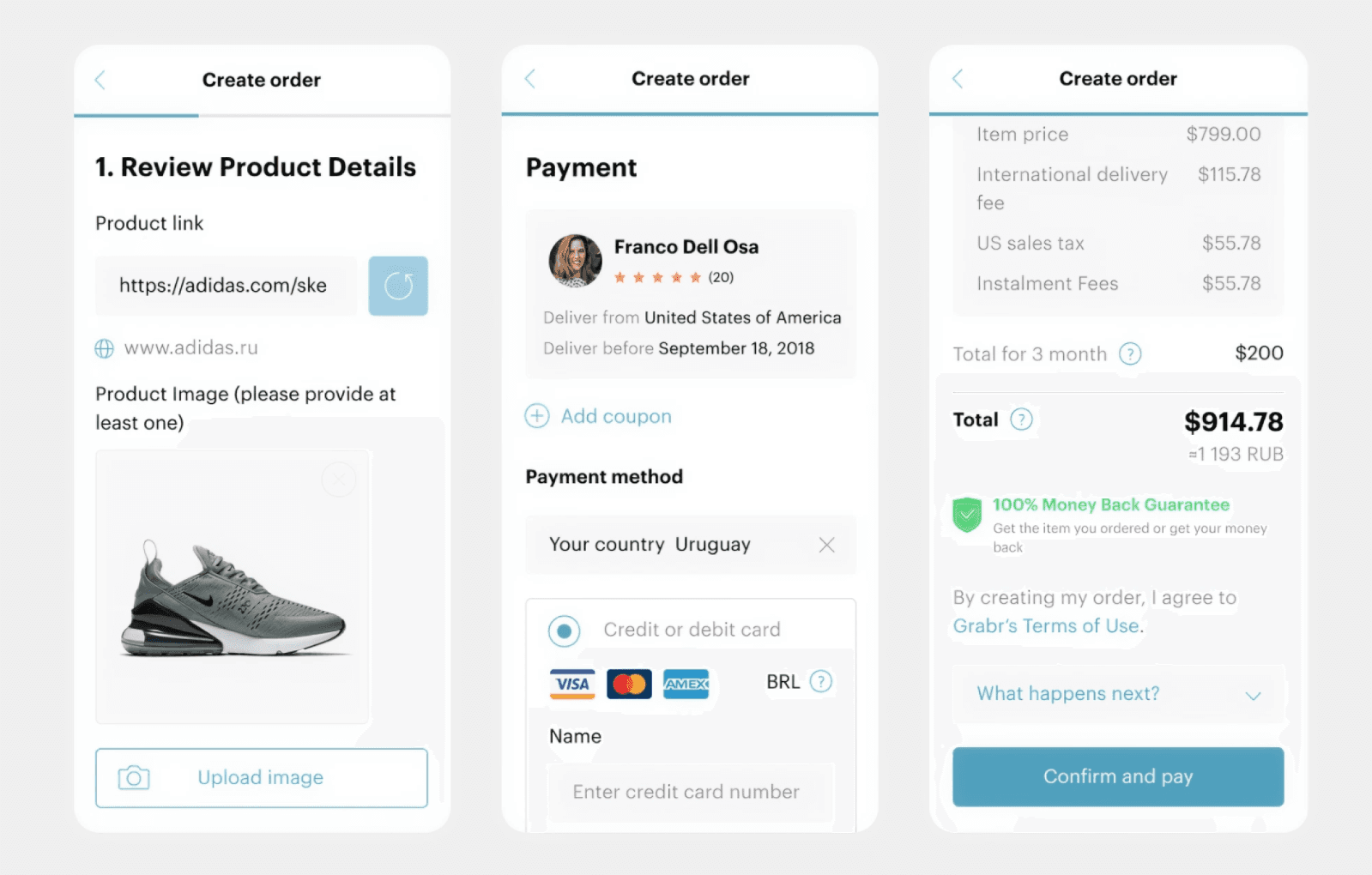
Reorganized a fragmented ordering process into a progressive, e-commerce-inspired flow with clearer information hierarchy and predictable decision points.
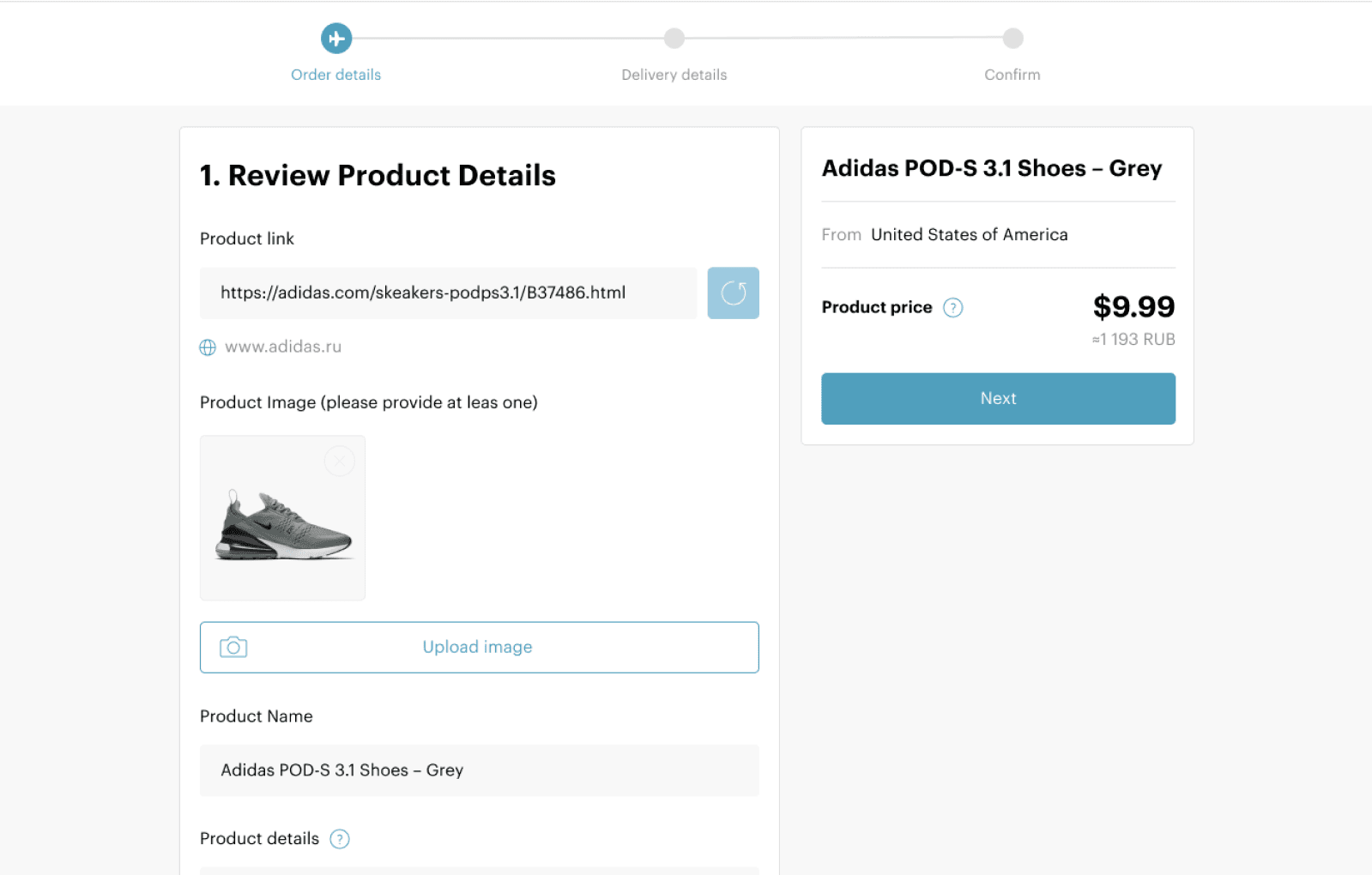
Introduced contextual trust signals including verified travelers, transparent pricing, delivery guarantees, installment information and social proof to reduce perceived risk.
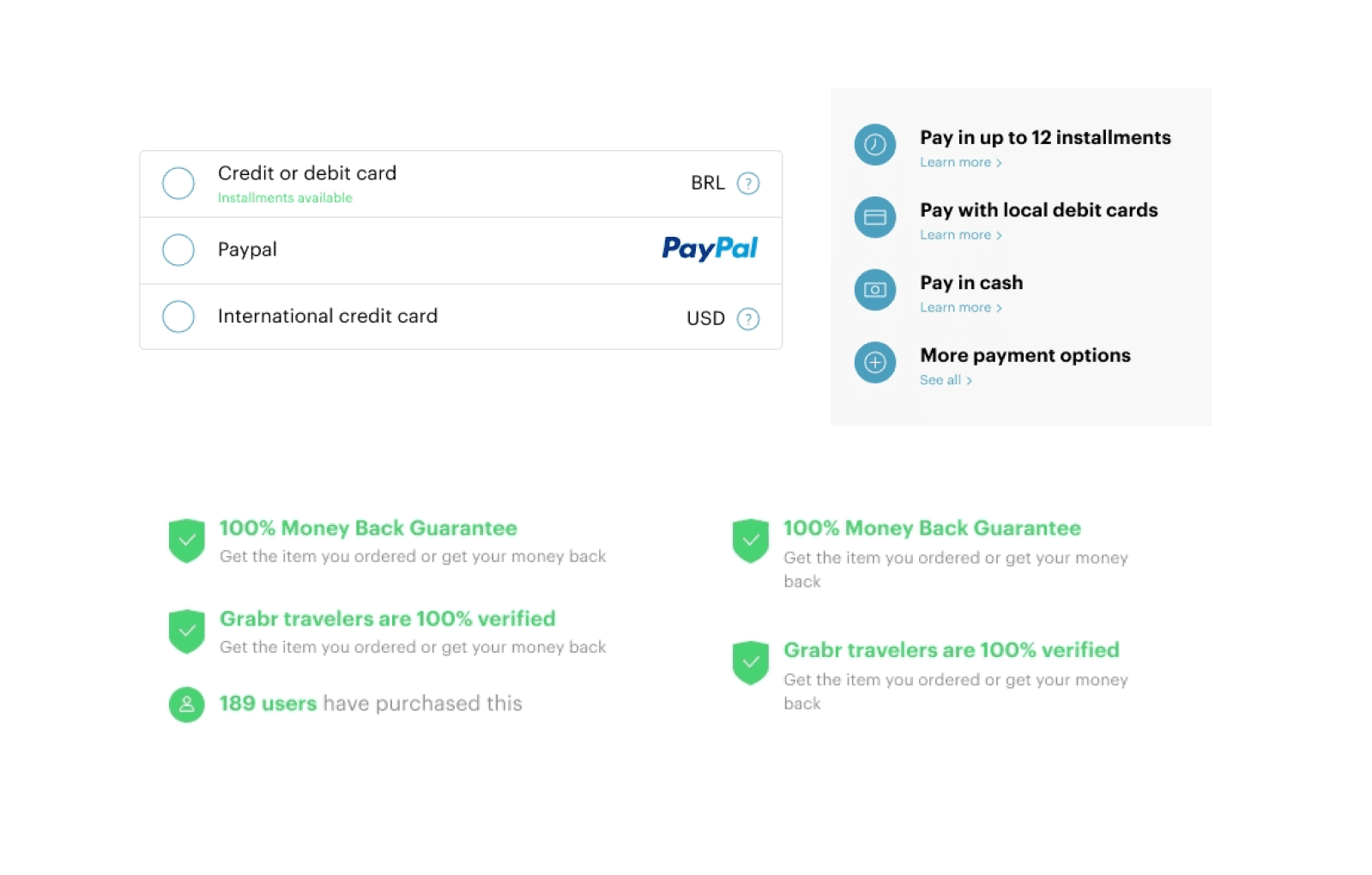
Created adaptive components and responsive patterns prioritizing mobile traffic while maintaining consistency across platforms.
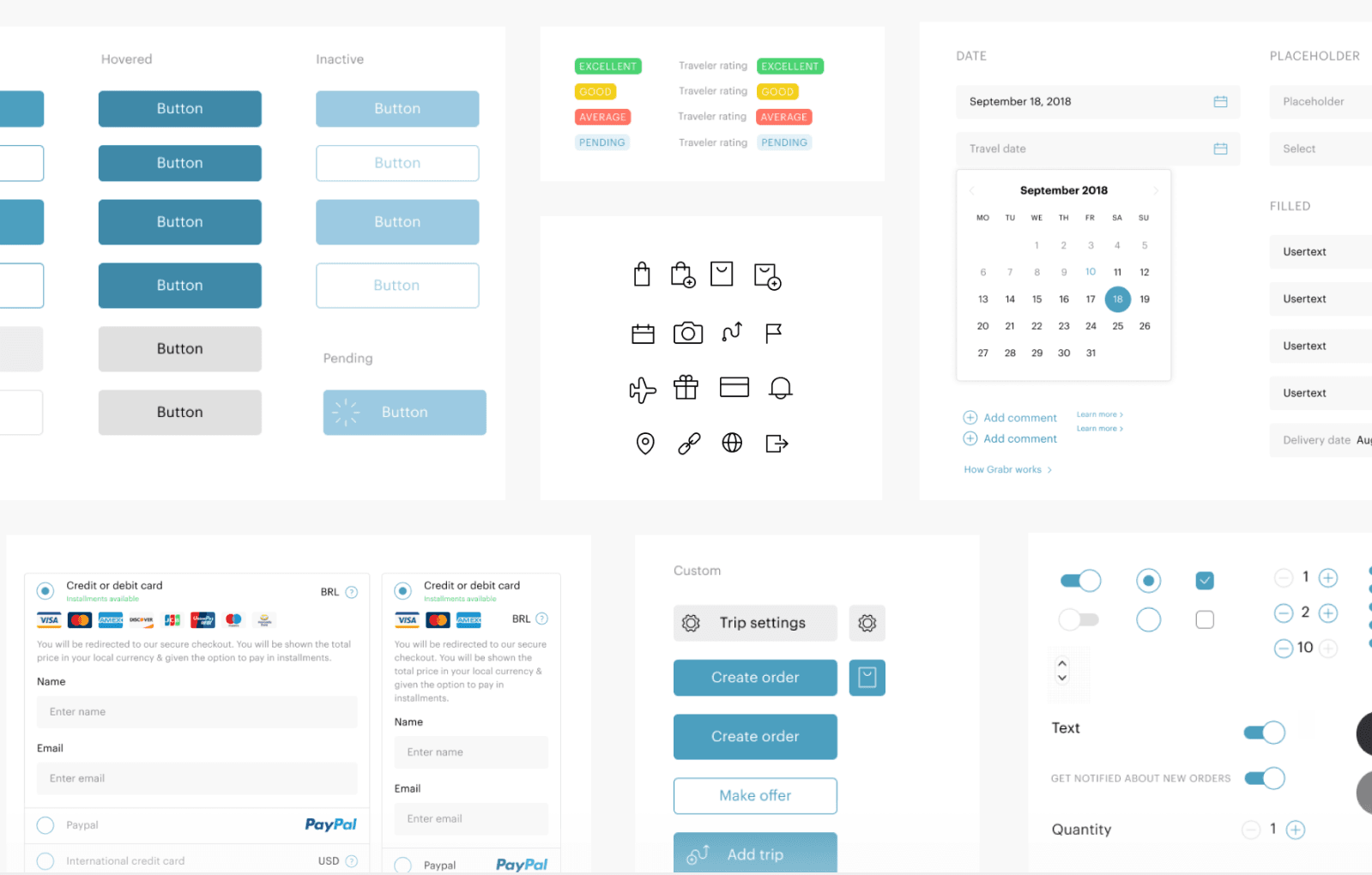
Migrated legacy Sketch assets into a centralized Figma design system, enabling scalable component reuse, faster delivery and stronger visual consistency.
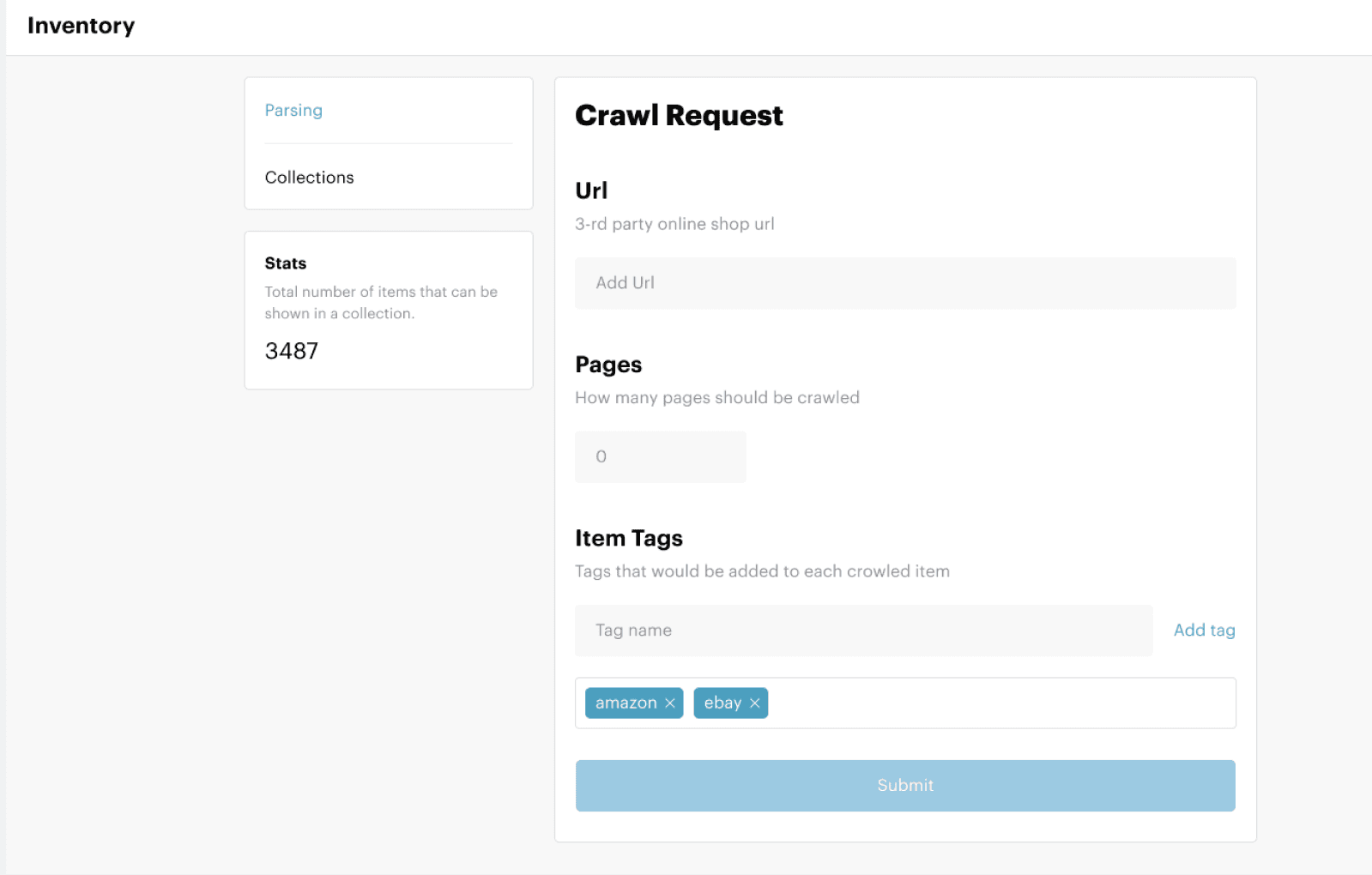
Designed inventory and catalog management tools that allowed marketing and operations teams to create collections without engineering involvement, reducing operational bottlenecks.
DESIGN CONSTRAINTS
The experience had to account for localized payments, fraud perception, growing product complexity, mobile usage growth and operational needs behind the marketplace. We also relied on a data-driven working rhythm: there was no dedicated product manager, so the team collectively split priorities between analytics, business development, design and engineering. Developers contributed important technical vision, and this close collaboration helped the platform evolve efficiently without losing product focus.

BUSINESS IMPACT
Trust is a product strategy, not a visual feature.
Great commerce UX minimizes uncertainty before asking for commitment.
Design systems become valuable only when they accelerate product delivery.
Internal products deserve the same design quality as customer-facing experiences.
Scalable product thinking creates more long-term value than isolated interface improvements.
Feel free to contact me if having any questions.
I'm available for new projects or just for chatting.
Herman Lewandowsky, 2026